
Disguised Alpha   /   Compound references. Original research.
GLP-2 TZResearch reference

Dual-pathway biology / Research reference

GLP-2 TZExplore incretin signaling.

GLP-2 TZ is a Disguised Alpha catalog name described in the context of GIP and GLP-1 receptor research. This guide focuses on the science of comparing incretin receptor signals. The catalog label should not be read as the name of the endogenous GLP-2 hormone, or as independent confirmation of a specific drug identity.

Pathway background · Catalog identity requires verification

A focused reference from the Disguised Alpha research network.

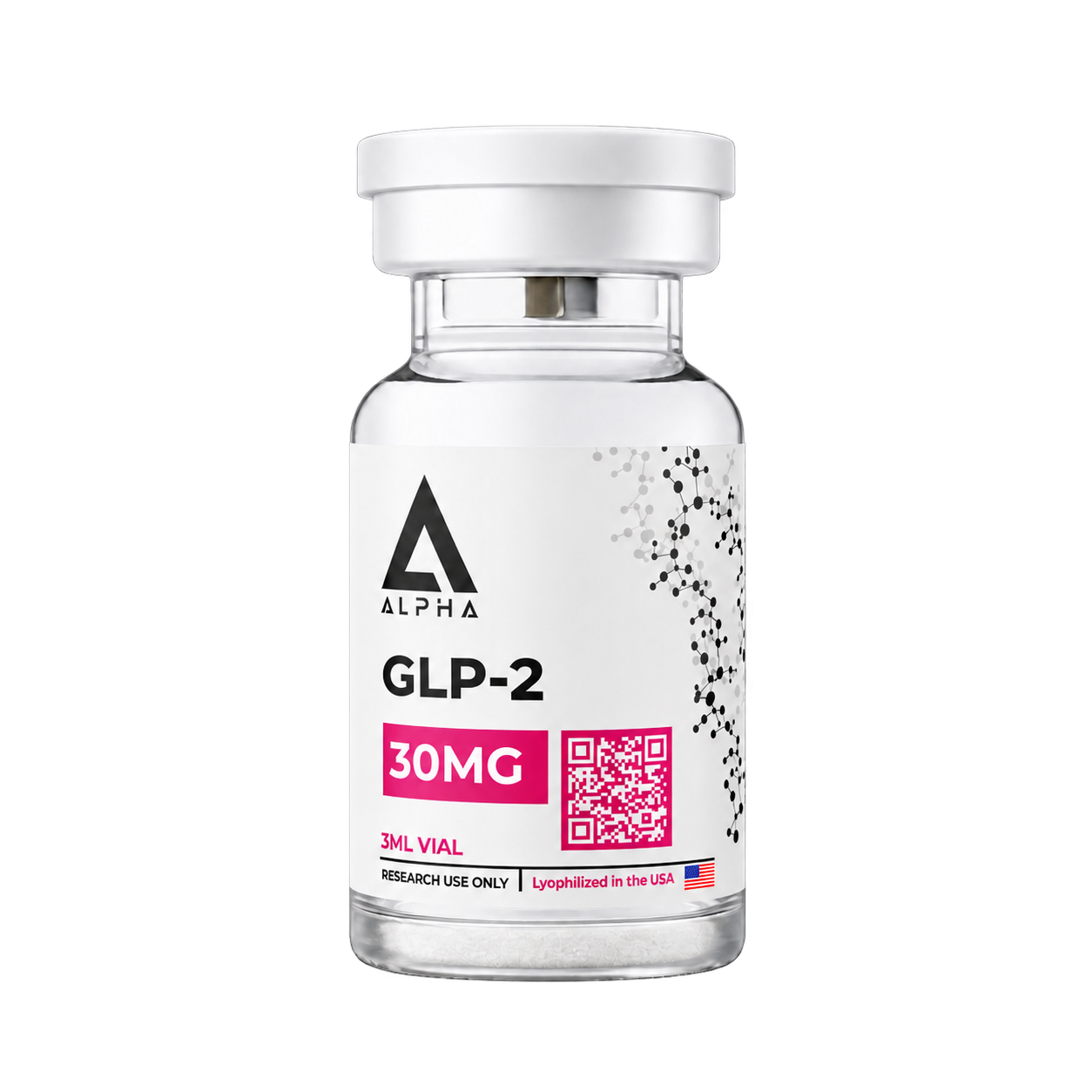
Disguised Alpha GLP-2 TZ product reference image
GLP-2 TZCatalog imagery · RUO
Catalog label
GLP-2 TZ
Research context
GIP / GLP-1 pathways
Evidence scope
Background pharmacology

01 / The science

Understand the research focus.

A clear starting point for the mechanisms, experimental models and questions behind the compound.

01

Two receptors, distinct responses

GIP and GLP-1 act through different receptors. Studies of dual agonists measure receptor-specific responses rather than assuming the same activity at both targets. This is useful background for interpreting dual-pathway research, not confirmation of a catalog material.

Read the primary source ↗
02

Bias is an experimental comparison

A ligand can favor one signaling readout over another. Work on defined dual agonists compared cAMP formation, G-protein recruitment and receptor internalization. Conclusions depend on the ligand, comparator and assay conditions.

Read the primary source ↗
03

Receptor variants can matter

Experiments with two human GIP-receptor variants examined several downstream signaling measures. Such work shows why receptor sequence and assay design belong in the interpretation of a result, alongside the identity of the ligand.

Read the primary source ↗

02 / Read with context

Know what the evidence can tell you.

The papers below examine specifically named ligands and receptor systems. They are not studies of GLP-2 TZ. Without a confirmed molecular and formulation match, their results should not be presented as effects of the catalog product.

Start with three questions.
01What was tested?
Check the exact molecule, sequence, composition and formulation.
02Where was it tested?
Cells, animals and clinical populations answer different questions.
03What was measured?
A pathway signal is different from a demonstrated clinical outcome.

03 / Selected publications

Go straight to the source.

Original records, study models and the limits that matter when interpreting a result.

STUDY 01 · 2020
Receptor signaling assays and primary islets

Comparing GIP and GLP-1 receptor activity

A study of the defined molecule tirzepatide compared GIP-receptor and GLP-1-receptor activity. It reported different receptor engagement and signaling profiles, including a preference for cAMP over β-arrestin recruitment at GLP-1R.

Reading limit: This is background on a named research molecule. It does not establish that GLP-2 TZ is that molecule or that a catalog formulation shares those findings.

↗
STUDY 02 · 2021
Cell assays using BRET and live-cell microscopy

Signaling, trafficking and recycling

Researchers compared mono- and dual-agonists using receptor-signaling and trafficking readouts. Some dual agonists showed preserved cAMP responses alongside reduced receptor internalization relative to comparator ligands.

Reading limit: A signaling pattern in engineered cells does not by itself demonstrate a clinical result or product equivalence.

↗
STUDY 03 · 2024
COS-7 cells expressing GIP receptor variants

GIP receptor variants and ligand response

Investigators compared signaling at E354 and Q354 receptor variants. Multiple readouts helped distinguish ligand-dependent pharmacology rather than reducing receptor activity to a single measurement.

Reading limit: The study tested specified ligands and receptor preparations, not the GLP-2 TZ catalog formulation.

↗

A focused selection, not a systematic review. Named molecules in these publications are scientific comparators, not asserted identities of GLP-2 TZ.

Explore research & source notes →

04 / Common questions

A little more clarity.

Quick answers for reading the science behind GLP-2 TZ.

Does GLP-2 TZ mean the GLP-2 hormone?

The Disguised Alpha catalog uses GLP-2 TZ as a product label in a GIP/GLP-1 research context. That shorthand should not be substituted for the distinct endogenous GLP-2 hormone.

Why do some references name other molecules?

Those papers are clearly marked pathway background. They explain how receptor signaling is investigated. They are not evidence of the identity or effects of GLP-2 TZ.

What is biased receptor signaling?

It describes relative differences between signaling outputs for a ligand under specified test conditions. It is not a general ranking of products or a guarantee of a clinical advantage.

What documentation comes before a study comparison?

Confirm the actual molecular identity, formulation and batch documentation, then check whether they correspond to the material studied. An abbreviation and an assay result answer different questions.

Continue your research

One compound. A wider research library.

Explore the complete GLP-2 TZ profile and related compounds in the Disguised Peptides research hub.

Open the full profile ↗